
In this guide, we break down the 6 key steps to select the perfect 480V double conversion UPS for your industrial equipment, so you can get reliable power protection that matches your exact needs.
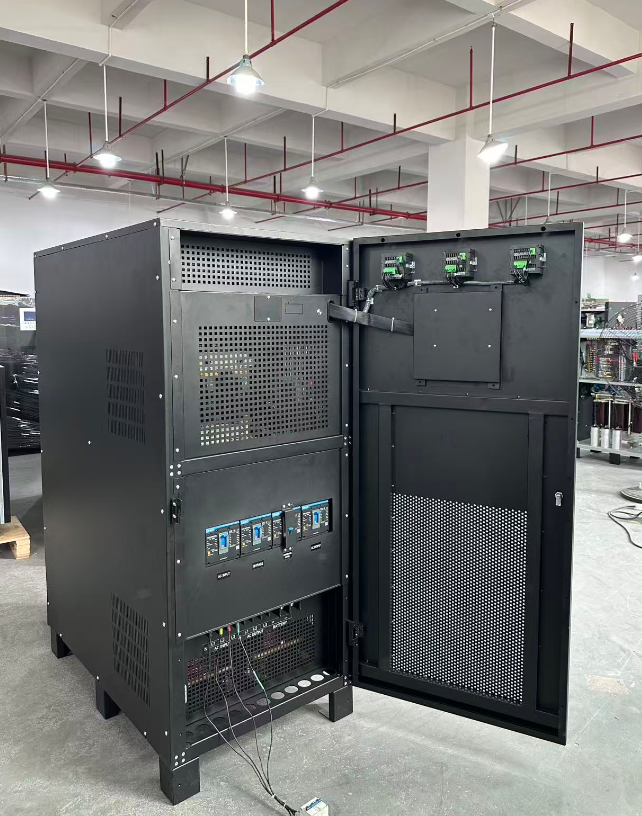
Account for 3-phase load types: Industrial 480V systems often include heavy inductive loads like motors, pumps, compressors and CNC machines. These draw 3-5 times their rated current during startup, so your UPS must handle this inrush current without tripping.
Add safety redundancy: For industrial applications, always select a UPS with 20-30% extra capacity above your calculated load. This accounts for future equipment additions, load fluctuations and extends the UPS lifespan. For critical processes with high startup loads, consider 50% redundancy.
Use kVA, not just kW: 480V industrial UPS units are rated in kVA (apparent power). For typical industrial loads with a power factor of 0.8, a 100kVA 480V UPS can support ~80kW of real power.
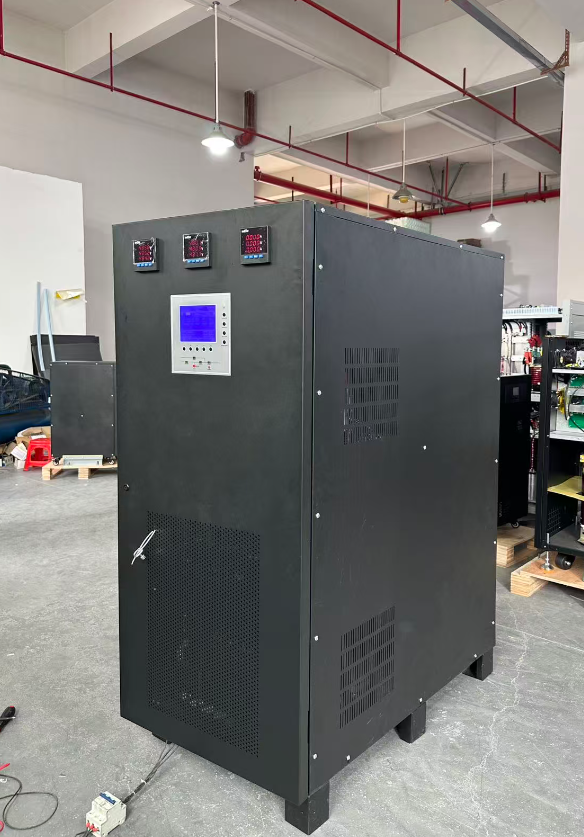
Voltage and frequency: 480V systems vary by region:
North America: 480V 60Hz 3-phase (most common)
South America (Brazil, Peru, etc.): 480V 60Hz or 440V 50Hz
Middle East & Africa: 380V/400V/415V 50Hz 3-phase
Always confirm both voltage and frequency match your local grid.
Wiring configuration: Check if your system is 3-phase 3-wire or 3-phase 4-wire (with neutral). Most industrial 480V systems are 3-phase 4-wire, but some older facilities use 3-wire delta configurations.
Wide input voltage range: Industrial grids often have large voltage fluctuations. Choose a 480V online UPS with a wide input range (typically 304V–528V) to avoid frequent battery discharge during voltage sags.
10–15 minutes: The most common option for facilities with backup generators. The UPS bridges the gap between grid failure and generator startup (usually 30 seconds to 2 minutes).
30–60 minutes: For facilities without generators, or for critical loads that need to complete a production cycle before safe shutdown.
2+ hours: For remote sites (mining, oil & gas) where grid outages can last hours, or for critical systems that cannot shut down.
Valve-regulated lead-acid (VRLA): The most common, cost-effective option for indoor, temperature-controlled facilities.
Gel batteries: Better for high-temperature environments (30°C+), common in factories and outdoor cabinets.
Lithium-ion: Longer lifespan, faster charge and smaller footprint, but higher upfront cost — ideal for high-availability data centers.
Dust and moisture: For dusty factory floors or outdoor installations, choose a UPS with at least IP20 protection (finger-safe, blocks large dust particles). For very dusty or damp environments, look for IP30 or sealed industrial cabinets.
Temperature range: Standard UPS units are rated for 0–40°C. For facilities with high ambient temperatures (like foundries, steel plants or desert sites), select an industrial-grade UPS rated for up to 55°C operation.
Cooling method: For 50kVA and larger 480V UPS units, forced-air cooling is standard. For dirty environments, look for units with filterable air intakes to prevent dust buildup on internal components.
Full double-conversion topology (zero transfer time)
Overvoltage/undervoltage protection
Overload and short-circuit protection
Surge and lightning protection (for sites prone to storms)
Harmonic filtering (to protect sensitive PLC and control equipment)
Look for UPS units with Modbus or SNMP communication protocols that integrate with your existing SCADA or building management system (BMS).
Remote alarm capabilities (email, SMS) for power events, low battery and fault alerts.
Optional temperature monitoring for battery cabinets to catch battery failures early.
Local support: For international customers, check if the supplier has local service partners or can provide on-site installation and maintenance support.
Certifications: Ensure the UPS meets the safety and EMC standards for your market:
CE (Europe, Middle East, Africa)
UL/cUL (North America)
ISO 9001 (quality management)
Warranty: Look for at least 1–2 years of standard warranty, with extended warranty options available.
Tel:+86-18718357506 E-mail:daisy@sstpowerltd.com






Skype

 +86-18718357506
 daisy@sstpowerltd.com
 English

 Español
 русский
 Français
 Deutsch
 عربي
عربي
 Portuguê
 Italiano
 한국어
한국어