
With voltage fluctuations frequently affecting homes, shops, and small workshops, single-phase 10kVA voltage stabilizers are becoming increasingly
popular. However, many buyers focus solely on nominal capacity and low prices, often falling into traps involving exaggerated specifications or
insufficient actual load capacity.
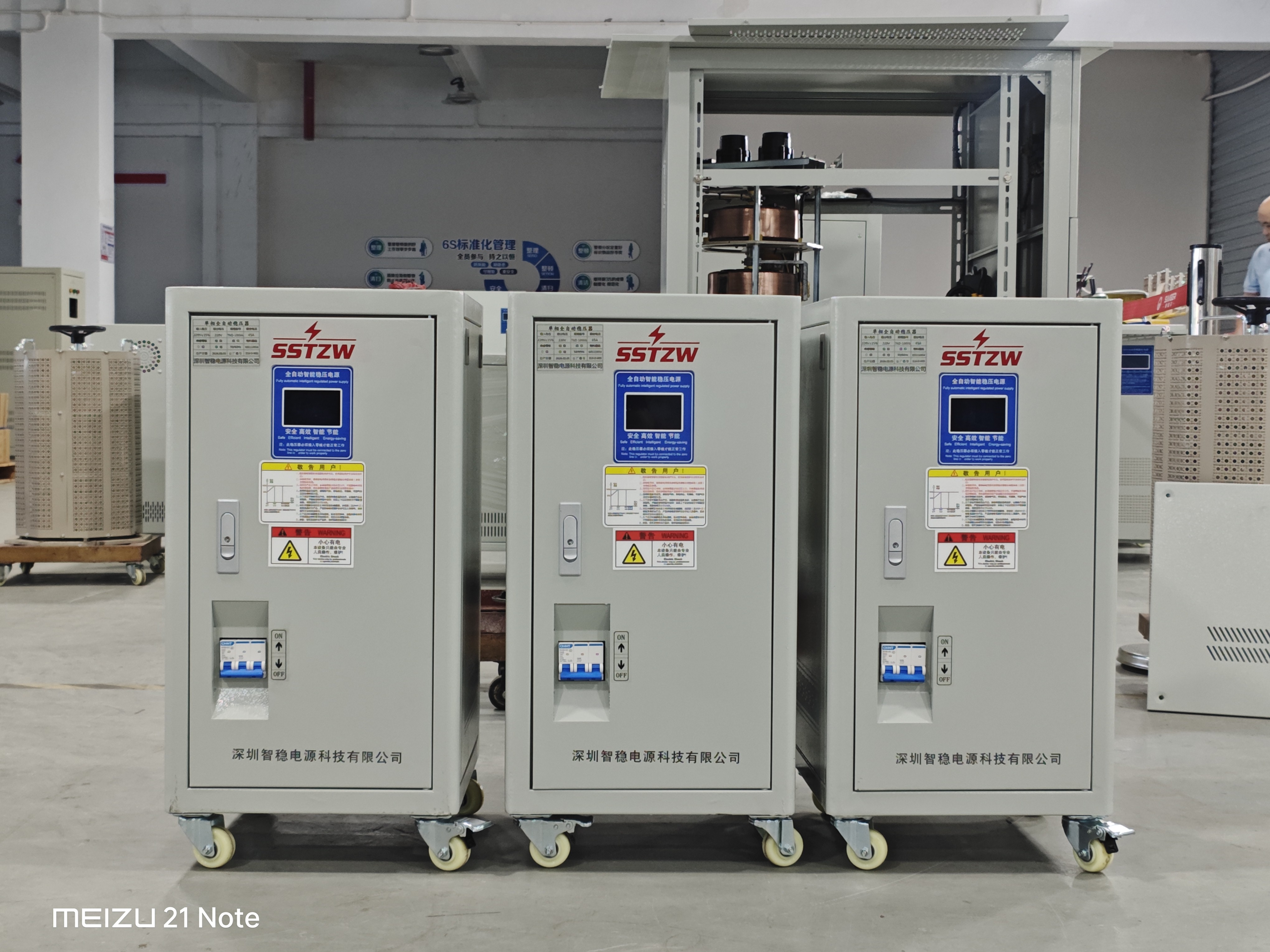
Many people mistakenly equate 10kVA directly with 10kW; based on the industry-standard power factor of 0.8, the actual active power of a 10kVA unit is
only 8kW. On many platforms, the actual output may be even lower—only 6kW or 7kW—since most customers do not operate at full load.
While resistive loads can handle near-full capacity, inductive loads (such as motors and compressors) generate high inrush currents upon startup. It is
recommended to limit the actual load to 5–6kW and allow a 20–30% power margin during selection to prevent burnout caused by prolonged full-load
operation.
Mainstream options on the market include servo-motor (carbon brush) types, relay types, and contactless stabilizers. Servo-motor types offer the best
value for money and are suitable for most general applications, making them the top recommendation. Relay types offer poor precision and are
unsuitable for sensitive equipment. Contactless stabilizers provide fast response times and suffer no mechanical wear, making them ideal for precision
instruments, though they come at a higher price.
Focus on these four key specifications when purchasing:
1. Input voltage range: Select based on local grid fluctuations; choose wide-range models for areas with low voltage.
2. Coil material: Prioritize all-copper coils; aluminum or copper-clad aluminum models generate excessive heat and have higher failure rates.
3. Protection features: Ensure the unit includes protection against over-voltage, under-voltage, overload, and short circuits.
4. Output precision: Choose based on requirements; ±3% is sufficient for standard household appliances, while ±1% is needed for precision equipment.
Tips for avoiding pitfalls: Beware of low-priced products with exaggerated specifications; for equipment involving motors, it is advisable to select a
higher capacity unit.
Industry experts recommend choosing reputable manufacturers with full certifications and comprehensive after-sales support; avoid blindly chasing low
prices to ensure effective protection for your connected equipment.
Tel:+86-18718357506 E-mail:daisy@sstpowerltd.com






Skype

 +86-18718357506
 daisy@sstpowerltd.com
 Français

 English
 Español
 русский
 Deutsch
 عربي
عربي
 Portuguê
 Italiano
 한국어
한국어